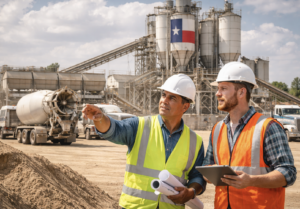
For a Texas automotive website, it is easy to treat concrete as background infrastructure instead of a serious operational topic. That would be a mistake. When people think about automotive operations, they usually picture assembly lines, robotics, supply chains, dealerships, fleet yards, testing grounds, logistics routes, and service centers. Yet beneath all of that activity is the physical environment that makes production, movement, storage, and expansion possible. That is why Texas Concrete Batching Plants matter more to automotive operations than many decision-makers realize. In a state where manufacturing scale, trade movement, and industrial growth continue to shape business decisions, the availability of reliable concrete supply is tied to how quickly a company can build, expand, reinforce, or modernize the spaces where work actually gets done.
Why Concrete Infrastructure Matters to Automotive Operations
Automotive operations are not limited to vehicle assembly. In Texas, they include supplier facilities, warehousing, parts distribution, heavy truck movement, parking and staging areas, service lanes, access roads, employee parking, loading zones, stormwater systems, and site expansions. All of those functions depend on concrete in one form or another. A strong batching network supports the slabs that carry repetitive heavy loads, the paving that handles daily truck traffic, and the foundations that support equipment, fabrication spaces, and industrial buildings. When concrete quality is inconsistent or delivery timing slips, the result is not just a construction inconvenience. It can delay openings, interrupt expansions, increase maintenance exposure, and create long-term durability issues that affect operations years after a project is completed.
That matters in Texas because automotive activity here is substantial and diverse. According to the state’s economic development materials, Texas has a deep manufacturing base, a highly specialized production workforce, and a major presence in motor vehicle parts and advanced manufacturing. The same state resources highlight how Toyota and GM continue to anchor major operations in Texas while supplier networks and workforce pipelines grow around them. In other words, Texas automotive operations are not abstract. They are physical, expanding, and dependent on industrial-grade infrastructure. Texas Economic Development’s advanced manufacturing overview makes that point clearly by tying automotive growth to workforce scale, supplier relationships, and manufacturing strength.
Texas Automotive Growth Raises the Stakes for Site Readiness
Texas is not standing still in the automotive space. The state is home to major assembly and production footprints, and that creates a practical need for site readiness at every level. Toyota Motor Manufacturing Texas has long been part of the San Antonio industrial picture, while Toyota’s San Antonio facility page reports that a new vehicle rolls off the line nearly every 60 seconds, with more than 3,700 employees and more than 20 on-site suppliers employing an additional 5,600 people. That is the kind of operating environment where supporting infrastructure cannot be treated casually. Concrete is not just a building material there. It is part of the production ecosystem.
The same is true in North Texas. GM’s Arlington Assembly investment announcement shows how serious long-term plant investment remains in the state. GM announced plans to invest more than $500 million in Arlington Assembly to prepare for future SUV production, including new tooling and equipment in stamping, the body shop, and general assembly. When an operation of that size modernizes, expands, or retools, the surrounding concrete needs are part of the equation, from equipment support areas to traffic-bearing surfaces and facility modifications. Large automotive projects do not run on spreadsheets alone. They run on finished sites that can carry real-world industrial demands.
Texas also continues to draw attention for newer forms of automotive and mobility activity. Reuters reporting on Tesla’s Austin robotaxi operations reflects how Austin remains connected to evolving transportation technology conversations. Even when the headlines focus on software, autonomy, or EV innovation, the physical side of operations still matters. Factories, charging-adjacent infrastructure, parking zones, logistics routes, and service footprints all rely on durable site construction. The flashier the automotive story becomes, the easier it is for people to forget the importance of the ground-level systems supporting it.
Where Concrete Batching Plants Create Real Value
The relevance of concrete batching capacity becomes even clearer when you look at the types of projects automotive companies deal with in Texas. One example is plant expansion. When a manufacturing campus adds a new production wing, supplier area, storage yard, or circulation route, it needs dependable concrete supply that aligns with schedule, engineering demands, and finish requirements. Another example is pavement replacement. Heavy industrial traffic wears down aprons, access roads, and loading areas. Automotive operations cannot afford weak surfaces in high-turnover zones where trucks, forklifts, trailers, and equipment move constantly.
There is also the matter of speed. In a fast-moving industrial environment, delays on concrete work can ripple across contractor schedules, equipment installation timelines, inspections, and go-live dates. That is part of why batching plants are relevant beyond the construction world. For automotive companies, concrete production is tied to operational sequencing. Reliable local or regional batching support can reduce scheduling friction, improve project coordination, and help companies avoid avoidable downtime during new development or retrofit work.
Concrete also affects safety and compliance. Poorly performing surfaces can contribute to drainage problems, standing water, cracking, trip hazards, and maintenance headaches. In Texas, where heat, heavy rain events, and sustained industrial use all put pressure on surfaces, the quality of the initial mix and placement matters. Automotive operators that think long term understand that infrastructure decisions made during construction have direct consequences for maintenance budgets, traffic flow, and employee safety later on.
Logistics and Trade Make the Connection Even Stronger
Texas automotive operations are deeply connected to movement. Vehicles, parts, raw materials, and finished goods flow through ports, intermodal sites, highways, and border gateways. That makes the logistics side of infrastructure impossible to ignore. The Texas Comptroller’s trade report notes that Texas remains first among all states in overall trade value and first in commodities exported from the United States, with 2024 trade value topping $1 trillion. It also highlights the scale of trade running through Texas ports and border infrastructure, especially with Mexico. For automotive operations, that means the yards, transfer points, storage areas, and industrial corridors supporting trade activity have to be built for volume and durability.
This is where batching plants become strategically relevant. Automotive operations do not exist in isolation from freight. Concrete supports the staging areas where trailers sit, the access points where goods move, and the industrial surfaces that absorb daily wear from repeated loading cycles. When a state is moving that much value through its infrastructure, the businesses operating inside that environment benefit from dependable construction inputs. It is not glamorous, but it is foundational. A weak concrete strategy can undermine a strong logistics strategy.
Manufacturing Conditions in Texas Make Reliability More Important
The broader business climate also adds weight to this conversation. The Dallas Fed’s Texas Manufacturing Outlook Survey reported that Texas factory activity expanded solidly in January 2026, with production, new orders, capacity utilization, shipments, and employment all improving from the prior month. That does not mean every manufacturer is experiencing the same conditions, but it does reinforce an important point: when manufacturing activity is moving, companies need infrastructure that can keep up. Faster production cycles, more equipment use, and higher facility demands all increase the importance of dependable site performance.
For automotive operations, that means planning ahead instead of reacting late. A concrete problem discovered after installation is more expensive than one prevented through strong sourcing and project alignment. The right batching support can help automotive companies and their contractors think beyond price per yard and focus on performance, scheduling, durability, and fit for use. That is especially important for businesses managing expansions, retrofits, or supplier-related buildouts in multiple Texas markets.
Why This Topic Belongs on a Texas Automotive Website
A Texas automotive website should cover more than vehicles, sales, and technology trends. It should also speak to the infrastructure realities shaping how automotive businesses operate in the state. That includes the industrial systems that support production, movement, and growth. Writing about concrete batching plants in this context is not off-topic. It is highly relevant to readers involved in manufacturing, supplier relationships, commercial fleet operations, property development, logistics, and facility management.
It also creates stronger topical depth for search visibility. A well-structured article that connects industrial materials, manufacturing growth, Texas trade, and automotive operations can strengthen relevance for readers who think at the operational level. That includes plant managers, owners, investors, developers, and service providers who care about what keeps automotive business moving in the real world. By grounding the article in credible sources such as Texas economic development data, official automaker updates, state trade reporting, and manufacturing indicators, the content earns more trust than a generic opinion piece.
Conclusion
Texas automotive operations depend on much more than assembly lines and market demand. They depend on the built environment that supports production, transport, storage, expansion, and daily industrial performance. That is why concrete batching plants deserve attention in this space. They are part of the infrastructure backbone behind factories, yards, supplier campuses, logistics hubs, and service-heavy properties across the state.
For automotive businesses in Texas, concrete is not a side issue. It is a practical business issue tied to timeline certainty, surface durability, traffic flow, expansion readiness, and long-term facility value. The stronger Texas becomes as a manufacturing and transportation powerhouse, the more relevant high-quality concrete supply becomes. That is the real connection. Texas automotive operations run on strategy, labor, technology, and movement, but all of it still needs solid ground underneath it.